

Who Is Responsible When an AI Agent Spends Your Money? Michael Nevski on Agentic Commerce
Michael Nevski, Consumer Payments Market Intelligence Expert, shares consumer research on trust, responsibility and data sharing when AI agents make payments.
Michael Nevski, Consumer Payments Market Intelligence Expert, shares consumer research on trust, responsibility and data sharing when AI agents make payments.
Maarten Albarda, Marketing Expert for Leading Marketing Teams, explains how marketing changes when AI agents shop, recommend and buy for us.
Christina Fischer of Human Pattern Works explains why AI transformation is not a technology problem and how a neuro-inclusive playbook helps leaders.
Michael Carroll, Strategic Advisor and Fellow at LNS Research, explains what changes for advertising, trust and commerce when the customer is an AI agent.
Grant Ecker, Founder of Chief Architect Network, explains how capability-based planning and a seat at the strategy table prepare enterprise architecture for agentic AI.
Sebastian Wernicke, author of Data Inspired, explains why data, culture and strategy decide whether agentic AI succeeds beyond the technology.
Nitin Badjatia, a Senior CX Leader, explains why agentic commerce needs contracts, how the IEEE 7012 MyTerms standard works and where organizations can start.
Doug Shannon explains how AI is accelerating the speed of business and why leaders should build on what they do well, enable their people and prepare for agent orchestration.
Joseph X Ng, Chief Strategy Officer at GeneGenius, explains why leaders should govern converging AI, cybersecurity and quantum computing through architecture, not tools.
Kris Saling explains how to decide where AI agents fit in HR workflows, using the eliminate, simplify, automate, elevate framework.
Reid Blackman explains why the standard top-down approach to responsible AI is broken and which new ethical nightmares agentic AI creates for leaders.
Kristen Kehrer explains how MLOps and LLMOps help leaders move AI from demo to production through versioning, monitoring, evaluation and collaboration.
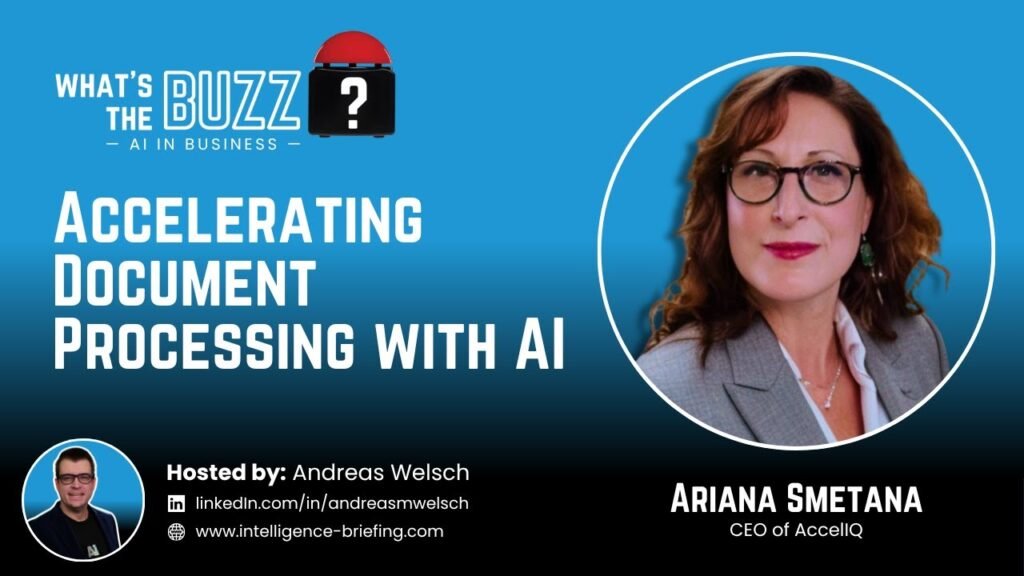
Ariana Smetana of AccelIQ Digital explains how a layered, human-in-control design makes AI document processing accurate enough for the office of the CFO.
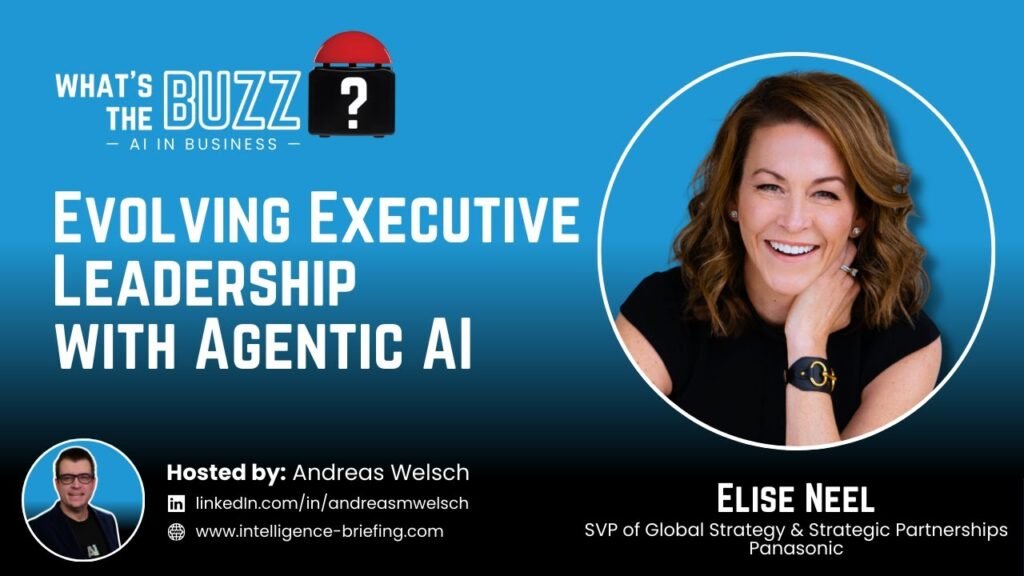
Elise Neel of Panasonic explains how agentic AI changes executive leadership, from orchestrating humans and agents to a C-suite sparring agent.
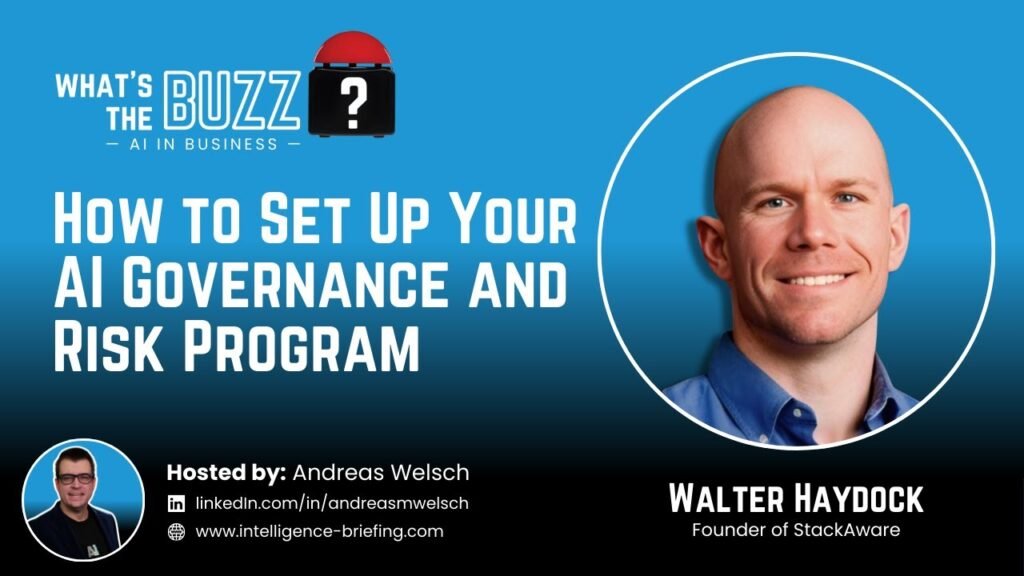
Walter Haydock, Founder of StackAware, explains how to set a risk appetite, write an AI governance policy and choose between regulation, the NIST AI RMF and ISO 42001.
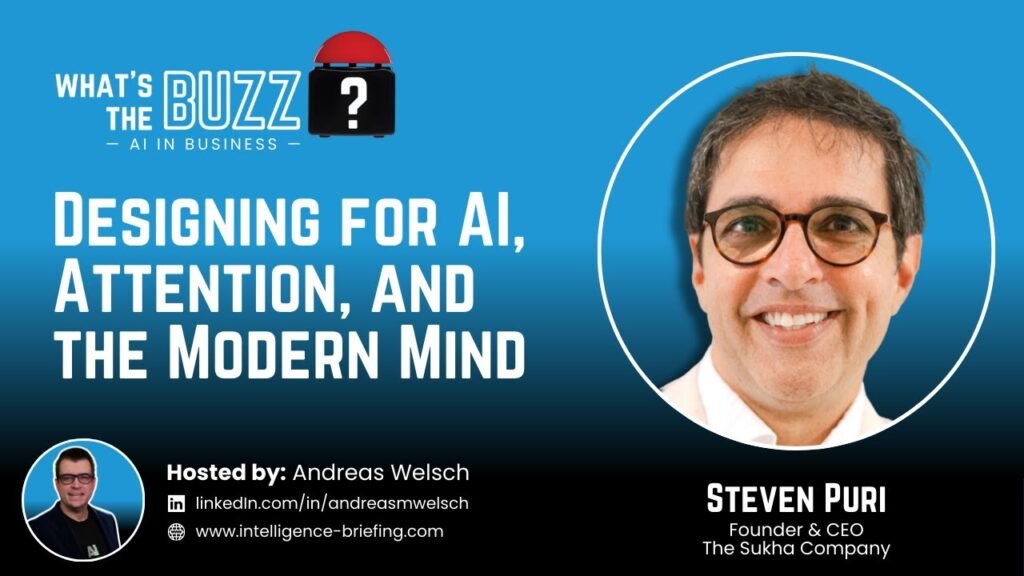
Steven Puri of The Sukha Company explains how flow states, deep work and a simple weekly exercise help people stay valuable as AI takes over shallow work.
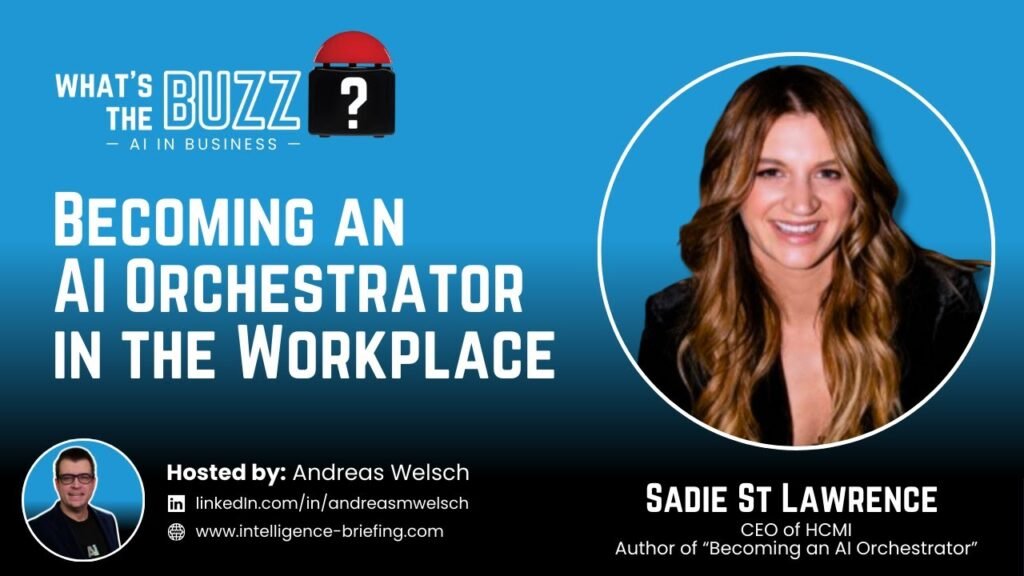
Sadie St Lawrence, CEO of Human Machine Collaboration Institute, explains how work shifts from doing to orchestrating AI and where leaders should start.
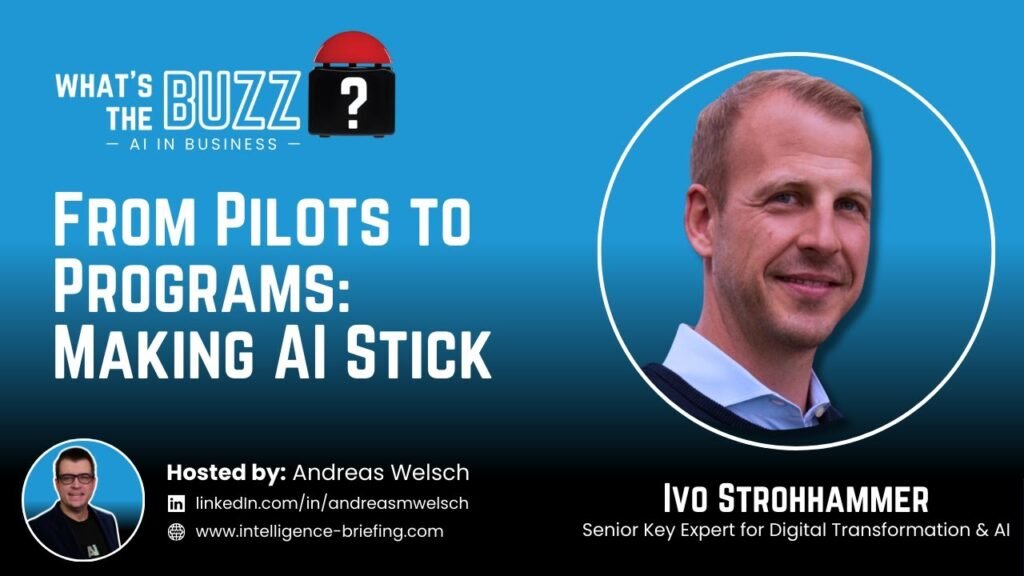
Ivo Strohhammer, AI Lead at Siemens SI, explains how to move AI from pilots to programs with a community, AI champions, secure tools and a plan that resets every year.
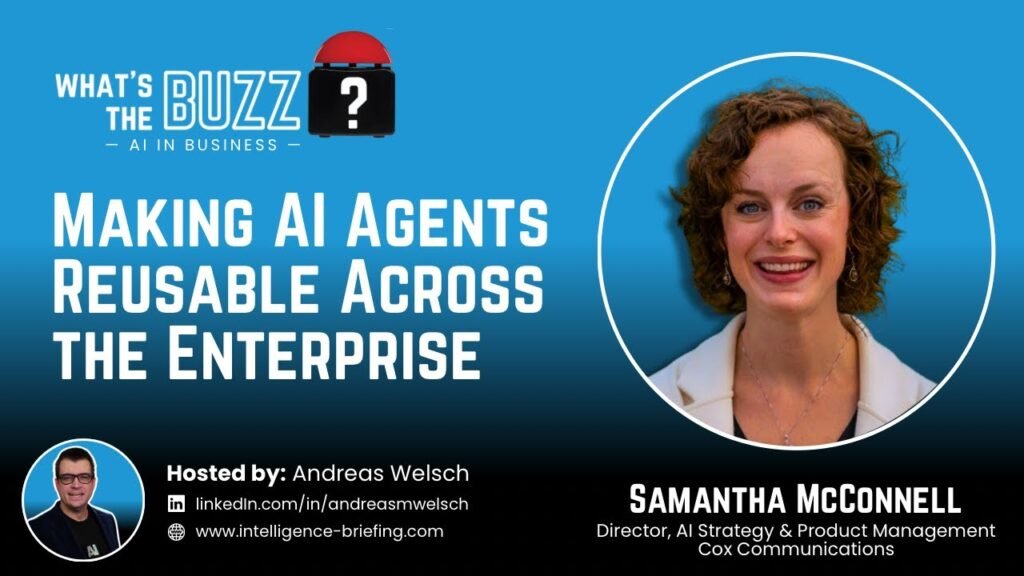
Samantha McConnell of Cox Communications explains how a registry, an AI council and clear adoption metrics keep enterprise AI agents reusable.
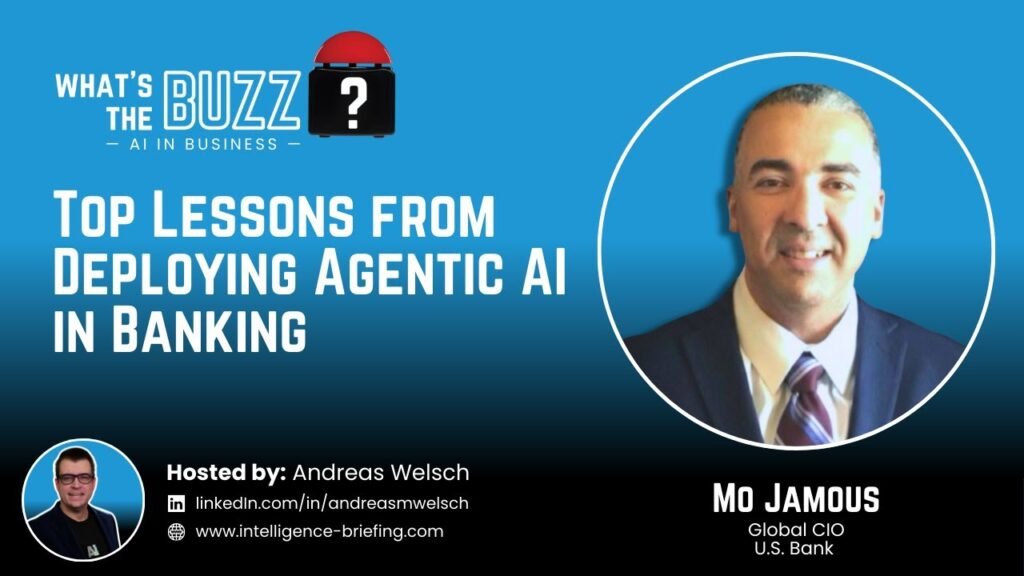
Mo Jamous, CIO of U.S. Bank, explains how a regulated bank deploys agentic AI, from a code review agent to governance, adoption and measuring value.