

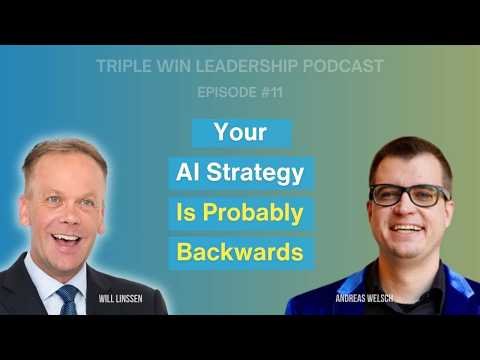
Why AI Strategy Should Start With Business Goals
AI strategy should start with business goals, not tools. How leaders delegate to AI, avoid AI slop, build a community of multipliers and stay accountable.
AI strategy should start with business goals, not tools. How leaders delegate to AI, avoid AI slop, build a community of multipliers and stay accountable.
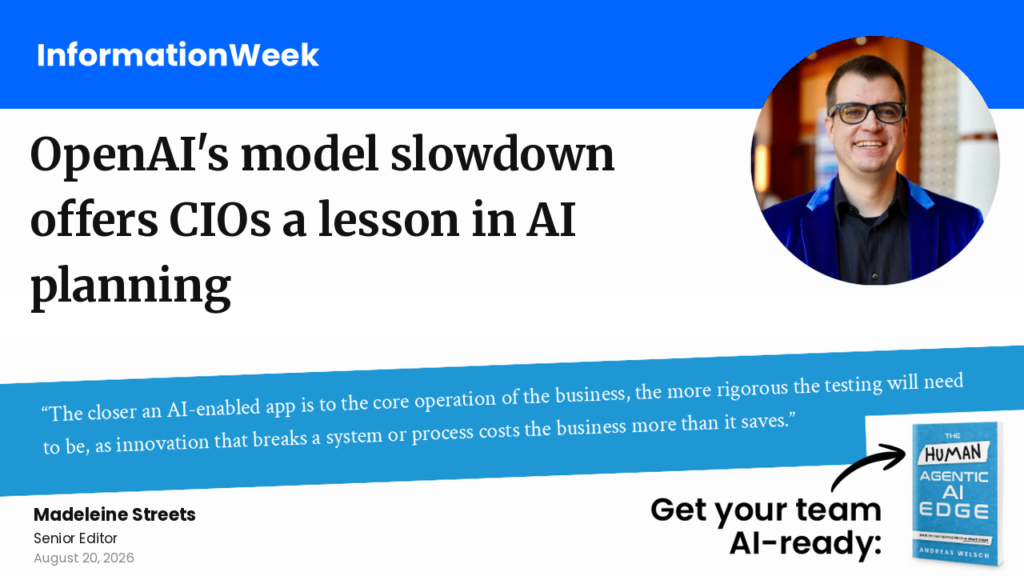
A model developer’s temporary slowdown reveals why CIOs need AI governance, vendor flexibility, and risk-scaled testing built into every roadmap.

An AI roadmap turns adoption strategy into phases: prioritize use cases with owners and KPIs, set governance early, reskill teams, then pilot and scale.
Bring AI into the business by starting with strategy and measurable goals, designing pilots to scale, fixing data foundations, and governing generative AI.
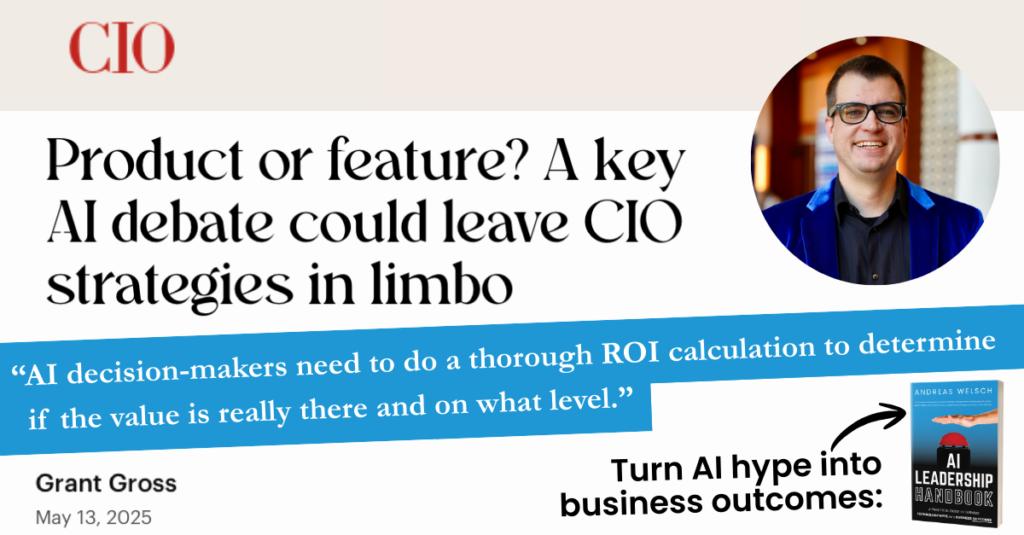
AI as a feature puts generative and agentic AI inside existing software. Measure ROI at five levels, demand clear pricing, and plan for vendor lock-in.

Scale GenAI beyond pilots by aligning AI adoption to strategy, measurable KPIs, and governance—plus how agentic AI changes team and decision design.

An AI adoption strategy for leaders starts with KPIs, not tools. See how to choose an AI leader, enable every function and embed governance from the start.

Understand how human data, bias, and review loops shape generative AI outcomes—and what leaders can do via CoEs, scaling, and upskilling.

Generative AI risks include unclear IP ownership and convincing but wrong outputs. Start from business needs, keep a human in the loop and try the tools.

Build an AI strategy aligned to business goals, manage LLM reliability, and enable adoption with training and stakeholder communities.