


AI for Small Business: Where to Start and How to Test Your Automation
See where small businesses should start with AI, which tasks to automate, how to test safely before roll-out, and which metrics show real business impact.
See where small businesses should start with AI, which tasks to automate, how to test safely before roll-out, and which metrics show real business impact.
A model developer’s temporary slowdown reveals why CIOs need AI governance, vendor flexibility, and risk-scaled testing built into every roadmap.

AI governance controls auditors expect: discovery, classification, authentication, login enforcement and audit evidence proving an AI policy is enforced.

Evaluate SaaS vendors on AI governance: separate core from peripheral software, check AI risk standards and data ownership, and budget for metered usage.

Apple’s Gemini-for-Siri move spotlights build vs buy. Guidance on AI leadership, total cost of ownership, governance, and workforce needs.
An executive digital twin can save leaders time and improve proposals, but it brings drift, trust and knowledge-ownership risks the C-suite must govern.

AI skepticism at work persists even as more employees use AI. Why uneven utilization matters, and how training and visibility help leaders manage adoption.

Nvidia AI tokens fund agent usage, but most AI projects have failed since 2018. See the governance and workflow changes that decide whether agents pay off.
Agentic AI for process excellence needs clear roles, rules, ownership and escalation thresholds, or agents speed up tasks while adding rework.
Deploying AI agents: sort use cases into three risk tiers, write agent role descriptions, keep human reviewers accountable and pilot vendor agents first.
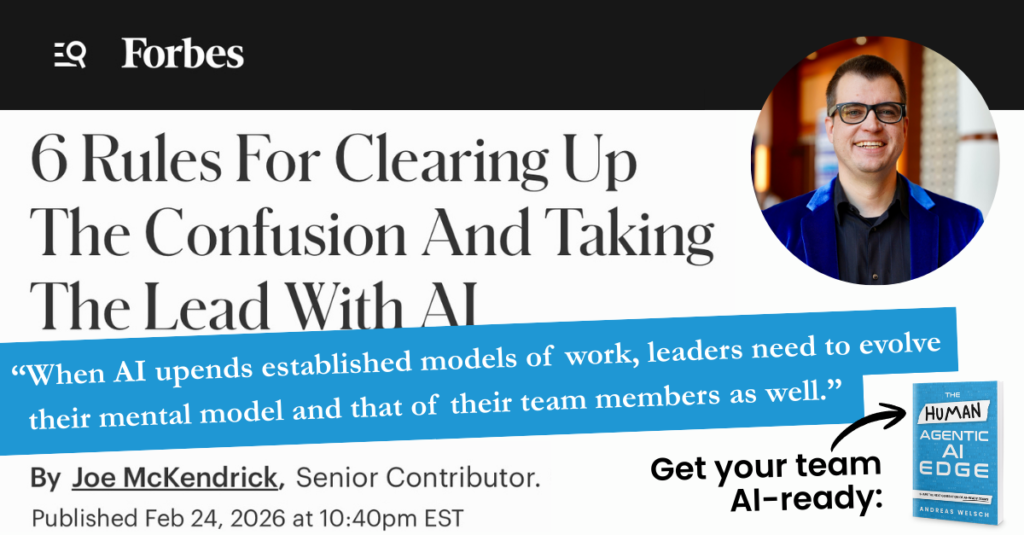
AI team integration for leaders: seven rules covering clear expectations, accountability, role-based upskilling, a team AI charter and outcome metrics.
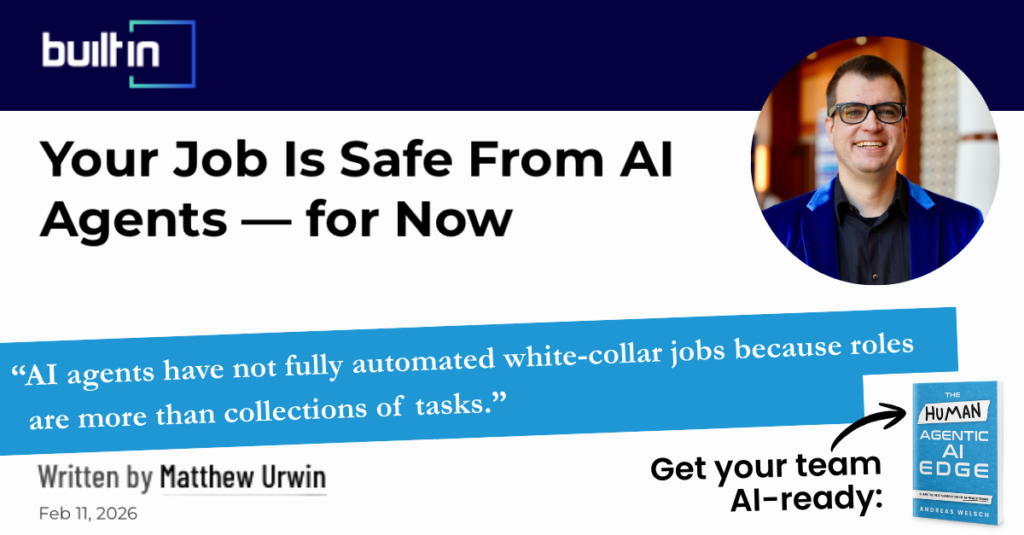
AI agents in the workplace answered at most 25 percent of APEX-Agents prompts correctly. What data quality, rework and role design mean for leaders.

Setting up your organization’s AI task force follows best practices for leadership, metrics, governance, and how to scale AI adoption successfully.

The GenAI divide is the gap between deploying AI and real outcomes. Cross it by prioritizing few use cases, applying GenAI in context and stopping early.
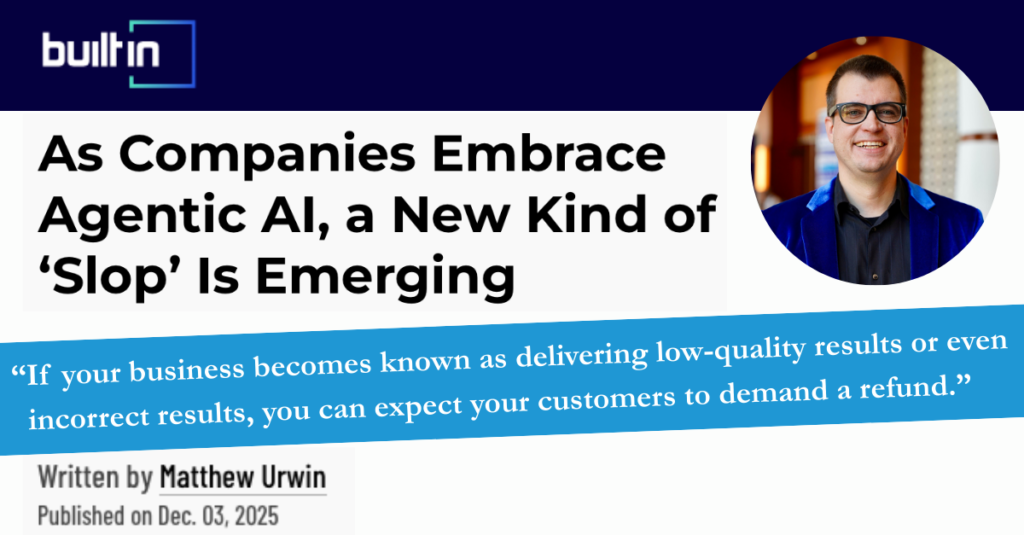
Agent slop is low-quality work from poorly designed AI agents. See how agentic AI governance, training, strategy, culture and orchestration prevent it.
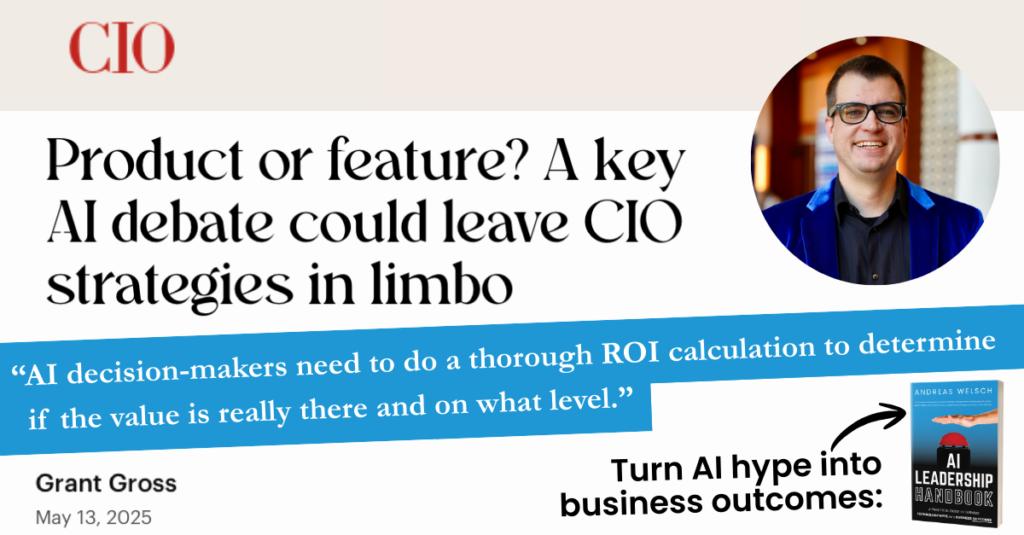
AI as a feature puts generative and agentic AI inside existing software. Measure ROI at five levels, demand clear pricing, and plan for vendor lock-in.

Prompt engineering training that scales: start with a Community of Multipliers, pilot in one area, match formats to maturity, and cover RAG and security.

IT cannot be the HR department for AI agents alone. See how an IT–HR partnership, clear agent roles and auditing make agentic AI governance work.

AI ROI stays hard to prove without baselines and governance. Assess value before building, review progress on a cadence, and stop what does not deliver.
Stop AI cost overruns with KPIs beyond ROI, business-aligned pilots, and set checkpoints that make dumping, pausing, or refocusing a project routine.

The enterprise prompt engineer role: which model to use, transactional cost, prompting technique, and safe output with fewer tokens, plus pay and risk.