

AI Team Integration: Practical Rules for Leaders
AI team integration is the process of embedding artificial intelligence tools and AI agents into daily team workflows so that people and machines work together effectively. Leaders must clear role confusion, set clear expectations, and shape skills so teams deliver value reliably and at scale.
Organizations that treat AI as an operational partner can free people to focus on higher-value work. However, successful integration requires rules, training, and governance to maintain quality and accountability.
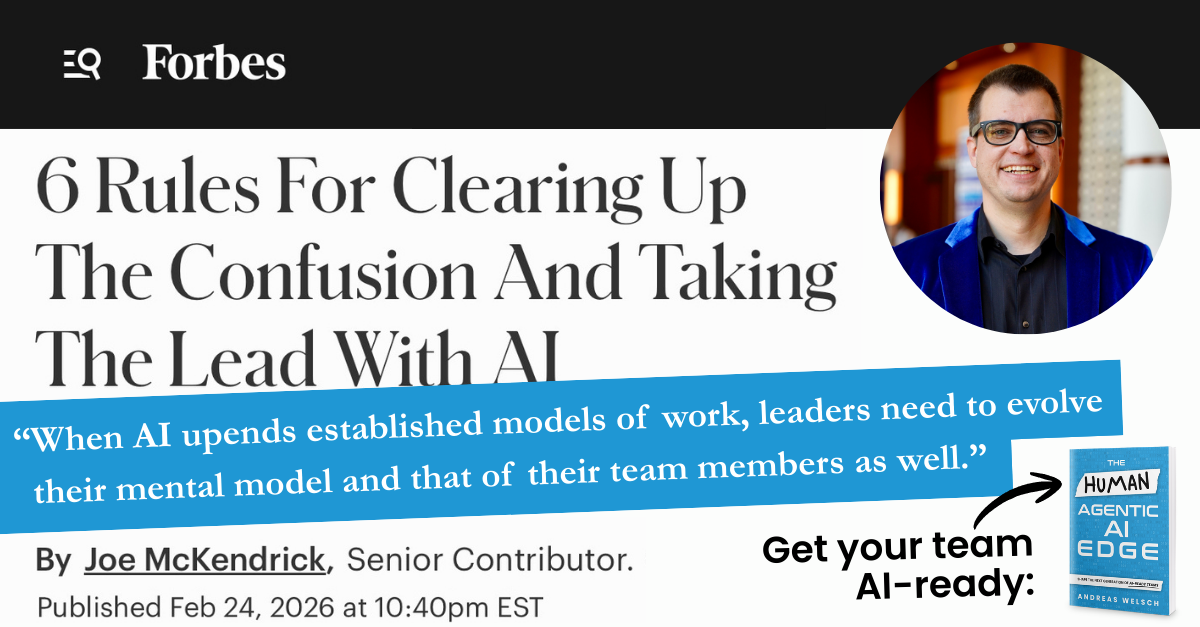
Original source: Read the original Forbes article
Key Takeaways
- Encourage practical AI use to accelerate adoption and normalize tools at work.
- Leaders must lead by example and visibly reward AI-driven innovation.
- Set explicit rules that define when to use AI, when to validate results, and when to escalate.
- Hold team members accountable for all outputs, including those produced with AI assistance.
- Invest in role-based upskilling so stakeholders can operate as stewards, orchestrators, builders, and everyday users.
- Create a team AI charter that states purpose, boundaries, and quality standards for AI use.
- Measure impact on quality, speed, and business outcomes rather than just usage metrics.
What is AI team integration?
AI team integration is the deliberate design and management of combined human-and-AI teams. It covers tooling, workflows, role definitions, governance, training, and success metrics. When implemented correctly, integration reduces routine work, raises throughput, and shifts human focus to judgment, creativity, and customer value. It also requires clarified expectations and safeguards so that AI complements rather than confuses the workforce.
Principles for embedding AI into teams
1. Encourage team members to use AI
Make AI use normal and visible. Share success stories and low-risk experiments so staff see practical benefits. Consequently, confidence grows, and resistance falls. Moreover, when leaders create a safe learning environment, employees test tools without fear of blame.
2. Lead by example
Leaders must model new behaviors, such as delegating preliminary research or drafting tasks to AI, then refining outputs with human judgment. For example, leaders who demonstrate proper prompts, validation steps, and documentation signal that AI is an accepted way of working.
3. Set clear expectations for when and how to use AI
Define use cases and quality gates. For instance, use AI to generate ideas, summarize research, or draft communications. However, require human validation for customer-facing or regulatory work. Therefore, workflows should state when to include external verification and when human sign-off is mandatory.
4. Ensure accountability for all outputs
Team members remain responsible for the results delivered with AI assistance. As a result, accountability statements should be explicit in role descriptions and performance reviews. Consequently, teams avoid drift toward ‘good enough’ outputs that compromise quality.
5. Provide role-based upskilling
Training should match responsibilities. For example, stewards learn governance and risk controls. Orchestrators learn to design hybrid workflows. Builders learn model basics. Everyday users learn prompt craft and validation. Therefore, invest in tailored learning paths rather than generic courses.
6. Create a team AI charter
A team AI charter records why AI is used, where it is allowed, and what quality standards apply. It should include clear examples and a decision table for common tasks. In addition, the charter must define escalation paths for errors or ambiguous outputs.
7. Measure outcomes, not just adoption
Track quality, cycle time, customer satisfaction, and risk reduction. For example, measure whether AI reduces manual hours while maintaining or improving quality. Consequently, use these metrics to prioritize improvements and to justify further investment.
Short, actionable guidance
Quick answer: Start small, with clear rules and a pilot team, then scale successful patterns across the organization. Ensure visible leadership support and role-based training throughout.
Quick answer: Treat AI output like any other vendor or team deliverable: verify accuracy, cite sources when needed, and log provenance. This reduces compliance risk and improves traceability.
Quick answer: Use a charter to align the team on purpose, boundaries, and sign-off rules. Update the charter as tools and risks evolve to keep governance current.
Implementation steps for leaders
Pilot with purpose
Begin with a focused pilot that targets a high-impact, low-risk process. For example, automate routine summarization or first-draft content creation. Then, validate outcomes and refine the approach before scaling. Moreover, document lessons and share them broadly.
Define roles and skills
Map who will act as steward, orchestrator, builder, multiplier, and everyday user. Then, create learning paths for each role. Consequently, this assignment reduces confusion and clarifies career growth tied to AI skills.
Build an operational playbook
Develop templates, prompt examples, and a validation checklist. For example, require a three-step validation for any AI-generated analysis: source check, method check, and human judgment check. Therefore, the playbook becomes the team’s practical guide.
Govern risk proactively
Identify regulatory, privacy, and bias risks early. Then, set tool restrictions and approval workflows for sensitive tasks. For example, block use of external models where data residency or confidentiality is an issue.
Scale iteratively
As pilots succeed, expand with clear guardrails and metrics. Consequently, maintain a cadence of review and charter updates. Additionally, reward teams that demonstrate improved outcomes and safe practices.
Snippet-ready answers
How should leaders measure AI success? Measure business outcomes first, such as time saved, error reductions, and customer satisfaction. Then, layer in operational metrics like adoption rates and validation pass rates. Use these combined measures to guide investment decisions.
What training is most effective? Role-specific, hands-on training is most effective. For example, combine short workshops with real work tasks and mentorship. Moreover, include validation and governance topics to ensure safe adoption.
When should AI not be used? Avoid AI for tasks that require legal judgment, confidential decisions without control, or where incorrect output could cause harm. Instead, use AI to augment preliminary work while reserving final decisions for qualified humans.
Recommended links and resources
For background reading and broader context, see these resources: Forbes, Gallup, and Harvard Business Review. These sources explain adoption trends, management attitudes, and workforce implications.
For internal follow-up, use these implementation templates: AI adoption playbook, Team AI charter template, and Role-based upskilling paths.
Conclusion
AI team integration is a strategic competency for modern organizations. Therefore, leaders should set clear rules, model new behaviors, and invest in role-based training. Moreover, a team AI charter combined with measurable outcomes will protect quality while unlocking productivity gains. Ultimately, teams that integrate AI thoughtfully will gain speed without sacrificing trust.
About the Author
The author is a strategist focused on AI adoption, workforce transformation, and leadership practices. With deep experience advising executives and designing learning programs, the author helps organizations align AI strategy with measurable business outcomes.
FAQ
What is the first step in integrating AI into a team?
Begin with a focused pilot on a high-impact, low-risk process. Then, define roles, create a validation checklist, and measure outcomes. This phased start reduces risk and builds practical experience.
How should teams handle AI-generated errors?
Errors should trigger a defined escalation path in the team AI charter. For example, log the error, assign a reviewer, correct the output, and update the playbook to prevent recurrence.
Who is accountable for AI-produced work?
Team members remain accountable for any work they deliver, including outputs assisted by AI. Therefore, accountability should be stated in role descriptions and performance criteria.
What should a team AI charter include?
A charter should include purpose, allowed use cases, quality standards, validation steps, escalation rules, and update cadence. This keeps expectations clear and auditable.
Which metrics indicate successful AI integration?
Measure business outcomes first: time saved, error rate, and customer experience. Then add operational metrics like adoption rates and validation pass rates to guide improvements.
How often should the AI charter be updated?
Update the charter at regular intervals or after major tool or process changes. For example, review quarterly or after any incident that affects quality or compliance.
What training matters most for AI users?
Hands-on, role-based training with real tasks is most effective. Include governance, prompt techniques, and validation practices to ensure safe adoption.
When should AI be avoided?
Avoid AI for decisions requiring legal judgment, sensitive confidentiality, or outcomes that could cause harm if incorrect. Instead, use AI to support humans who make final decisions.