


Agentic AI in Procurement: What Leaders Should Prioritize
Agentic AI in procurement: start with the business problem, fund data readiness, match autonomy to risk and upskill teams. See which workflows are ready.
Agentic AI in procurement: start with the business problem, fund data readiness, match autonomy to risk and upskill teams. See which workflows are ready.

Authentic thought leadership in the age of AI: add a real point of view, use AI as an editor, not an author, and keep human judgment and accountability.

Andreas Welsch explains how agentic AI reshapes Enterprise SaaS: disruption risk, outcome-based pricing, governance, traceability, and workforce shifts.

AI workslop shifts review onto leaders. Prevent it with clear decision rights, accountability for AI output, and hands-on training that protects quality.
Deploying AI agents: sort use cases into three risk tiers, write agent role descriptions, keep human reviewers accountable and pilot vendor agents first.
Human in the loop vs on the loop for agentic AI: match oversight to risk, treat agents as digital employees and as software, and apply the four A’s.
AI team integration for leaders: seven rules covering clear expectations, accountability, role-based upskilling, a team AI charter and outcome metrics.

Agentic AI is moving beyond proof-of-concept pilots into operational deployments.
AI agents in the workplace answered at most 25 percent of APEX-Agents prompts correctly. What data quality, rework and role design mean for leaders.
Boost human potential with AI by moving past Copilot rollouts: start with business problems, use existing vendor AI features, and scale with champions.

Setting up your organization’s AI task force follows best practices for leadership, metrics, governance, and how to scale AI adoption successfully.

The GenAI divide is the gap between deploying AI and real outcomes. Cross it by prioritizing few use cases, applying GenAI in context and stopping early.
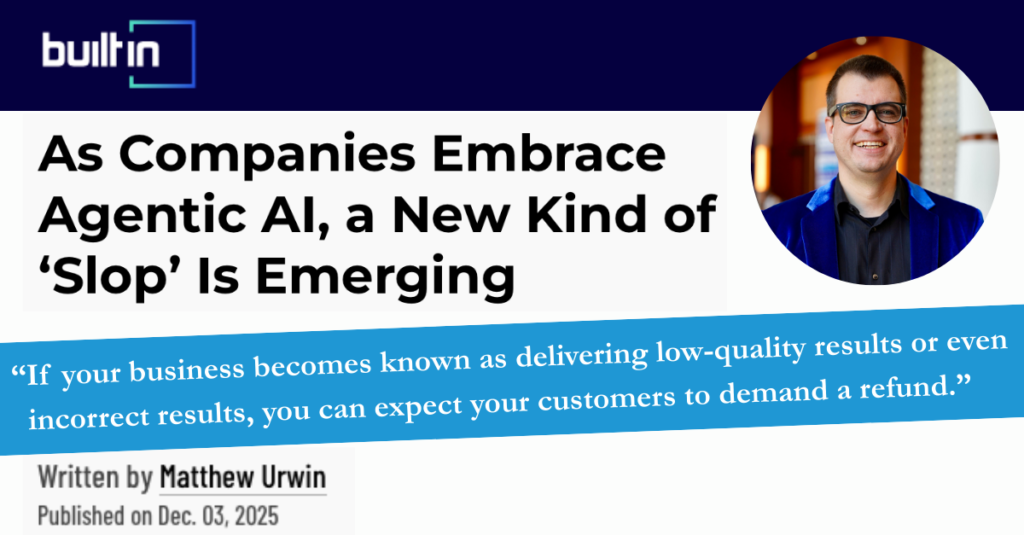
Agent slop is low-quality work from poorly designed AI agents. See how agentic AI governance, training, strategy, culture and orchestration prevent it.
An AI roadmap turns adoption strategy into phases: prioritize use cases with owners and KPIs, set governance early, reskill teams, then pilot and scale.
How leaders adopt agentic AI responsibly: clear AI ownership, secure tools, guardrails for citizen developers, and upskilling that prevents AI workslop.

Lightweight AI governance keeps AI slop and shadow AI in check: a fast intake process, one quality bar for all work, and human accountability for AI work.
Run successful AI projects by tying each one to a KPI, expecting iterative cycles, reviewing progress monthly, and using lightweight governance on spend.

What is Agentic AI really, how to avoid agent washing, and how can leaders govern adoption, prevent AI slop, and drive measurable impact.
AI in project management shifts work from gathering status to review and decisions. Why teams hide AI use, and how leaders set quality and accountability.

AI productivity only counts when it moves KPIs: test vendor claims, measure outcomes over minutes, and put people, data and governance first.

Bring AI into the business by starting with strategy and measurable goals, designing pilots to scale, fixing data foundations, and governing generative AI.
AI adoption in marketing needs guardrails, not bans: approve tools, keep sensitive data out, normalize transparent use and start with content repurposing.
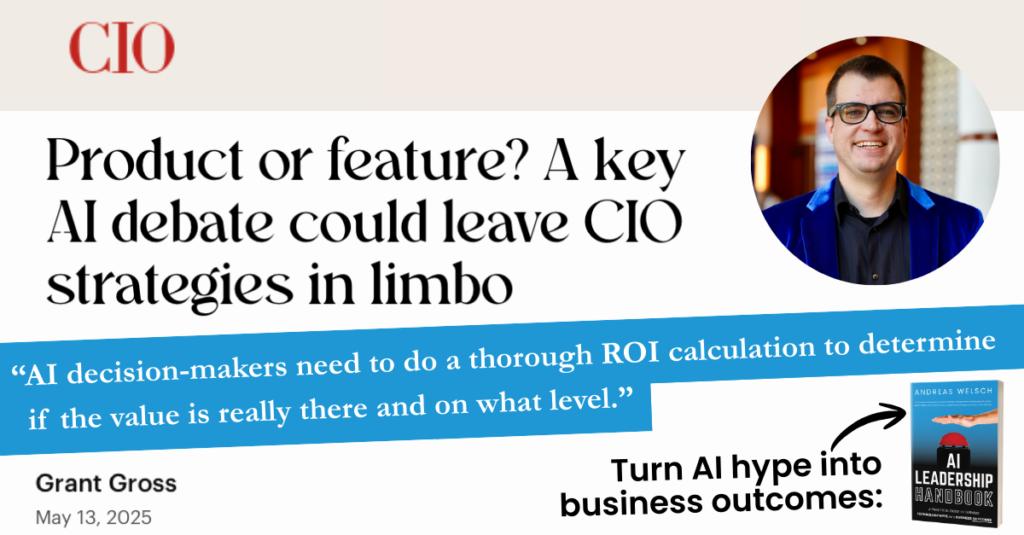
AI as a feature puts generative and agentic AI inside existing software. Measure ROI at five levels, demand clear pricing, and plan for vendor lock-in.

Scale GenAI beyond pilots by aligning AI adoption to strategy, measurable KPIs, and governance—plus how agentic AI changes team and decision design.
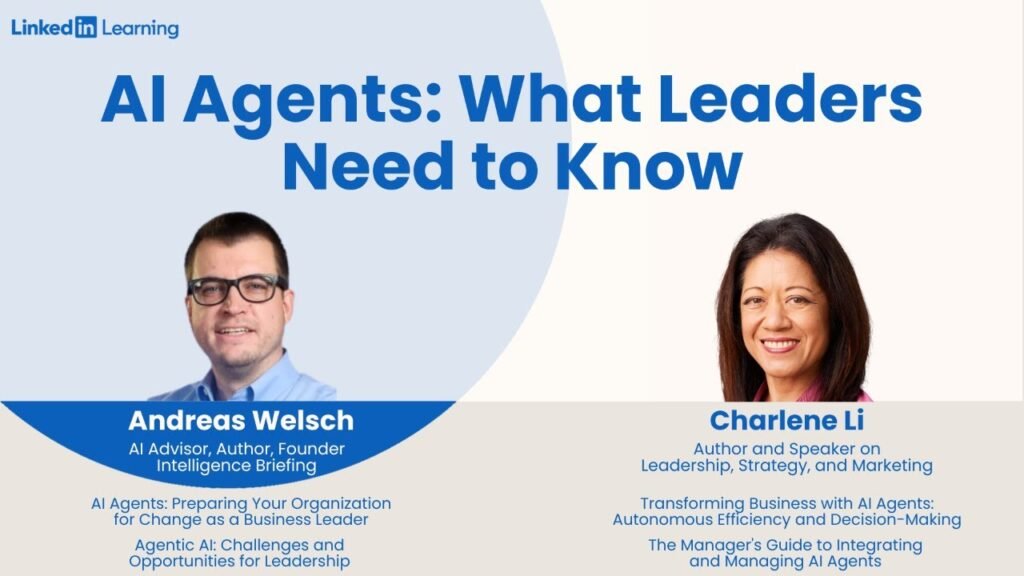
Agentic AI vs automation: how to test vendor agent claims, start with business problems, decide build vs buy, and bring employees along with transparency.
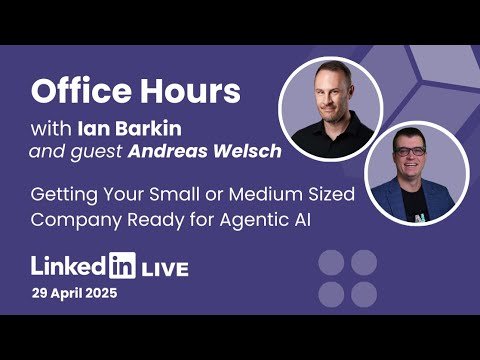
Agentic AI adoption guide for executives: what AI agents are, how they differ from RPA and chatbots, and how leaders test vendors and measure readiness.

AI fatigue grows when leaders chase headlines. Start with business strategy, fix data readiness and access controls, and make employee AI use visible.

Don’t outsource your thinking to AI. Start with business goals and KPIs, map processes, test ROI, and set quality standards so teams apply judgment.
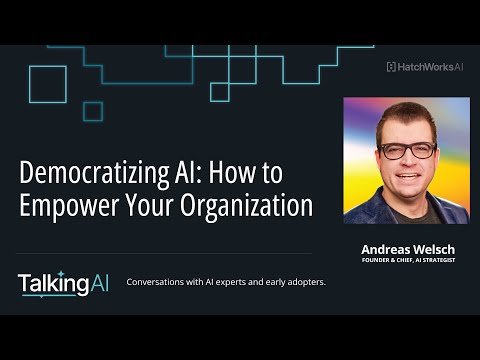
Build AI literacy through social blended learning, give the chief AI officer cross-functional reach, and govern AI agents with shared values and HR input.

Prompt engineering training that scales: start with a Community of Multipliers, pilot in one area, match formats to maturity, and cover RAG and security.